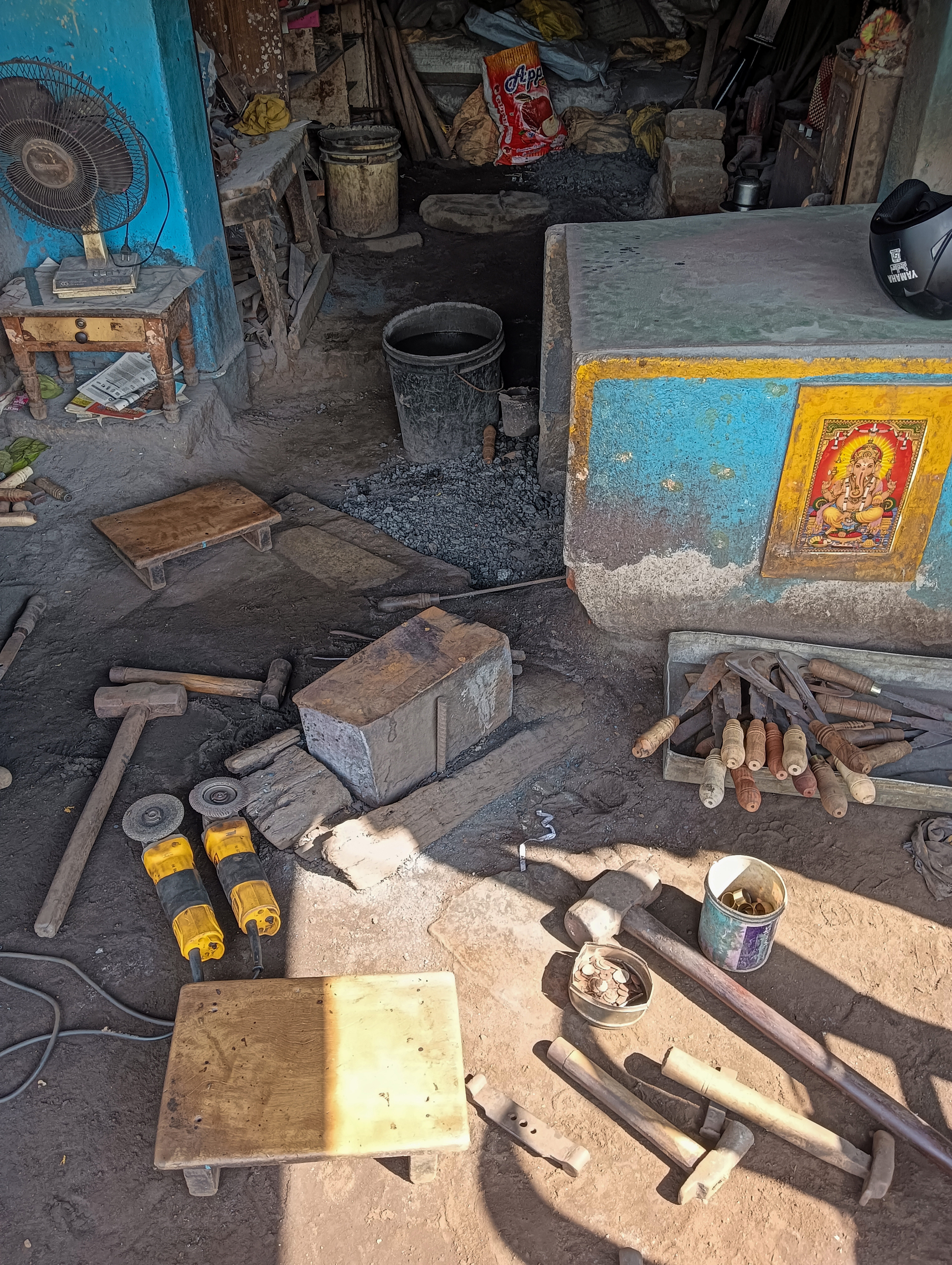
1. Introduction: Iron workshops have been operating in Thiruppuvanam, located on the banks of the Vaigai River in Sivaganga district, for a long time. It is said that in the past, the iron smiths living in this area used to make weapons and other equipment as per the demands of the Pandya kings. Now, they use iron to make agricultural tools, household tools, and billhooks. They produce some essential items in large quantities and display and sell them in their workshops. They also design tools as per the needs of the customers. Earlier, a large number of people in this village were involved in this industry. Now, only about 20 families are involved.
2. Raw materials: For about 40 years, they have been making billhooks (arivāl), using the what is locally referred to as 'Allap kaththi' used in rice mills; "spring bars" used in four-wheeled vehicles such as trucks, buses, and vans as raw materials. These are old iron scraps. The Thiruppuvanam arivāl, which is made of steel, is said to have a long life. Since the elongated billhook-like sickles (arivāl) are prepared only for the purpose of placing them in the temples as votive offerings, it is made of iron. But since the arivāl used for cutting wood must be strong, it is prepared using 'spring plate' which is made of pure steel. It is made so that it does not become blunt even when cutting dry wood.
3. Production method: High temperatures are required for operations such as melting and bonding metals like iron. A tool called a bellows (referred to as 'thuruthi' in Tamil) was used for this purpose in ancient times. Some time ago, at least six people were required to manufacture iron products in an iron workshop. Six people were required to blow the bellows, hammer, sit at the furnace face, shape the arivāl, and polish the iron tools. But now, machines are used instead of bellows to pump air into the furnace. Machines are also used to polish the iron tools. So now with the help of modern tools, a team of three or four people can make iron products. Charcoal is needed for iron work. But now due to the increased use of cylinders, charcoal (called 'aduppukari' in Tamil) is not much available anymore. Charcoal produced by anaerobic heating process (called 'karimoottam/moottathukari' in Tamil) is explosive and is not used for this work.
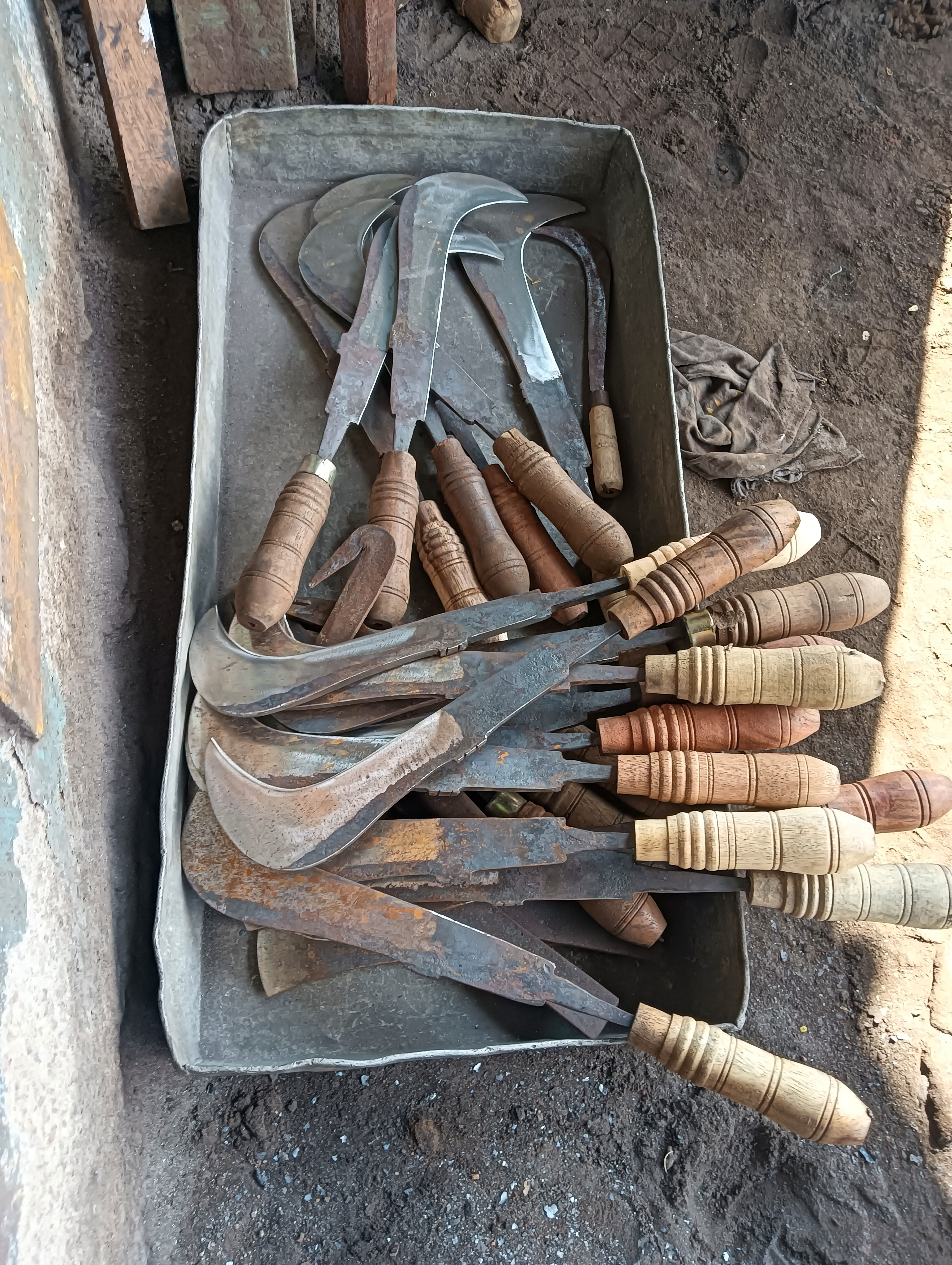
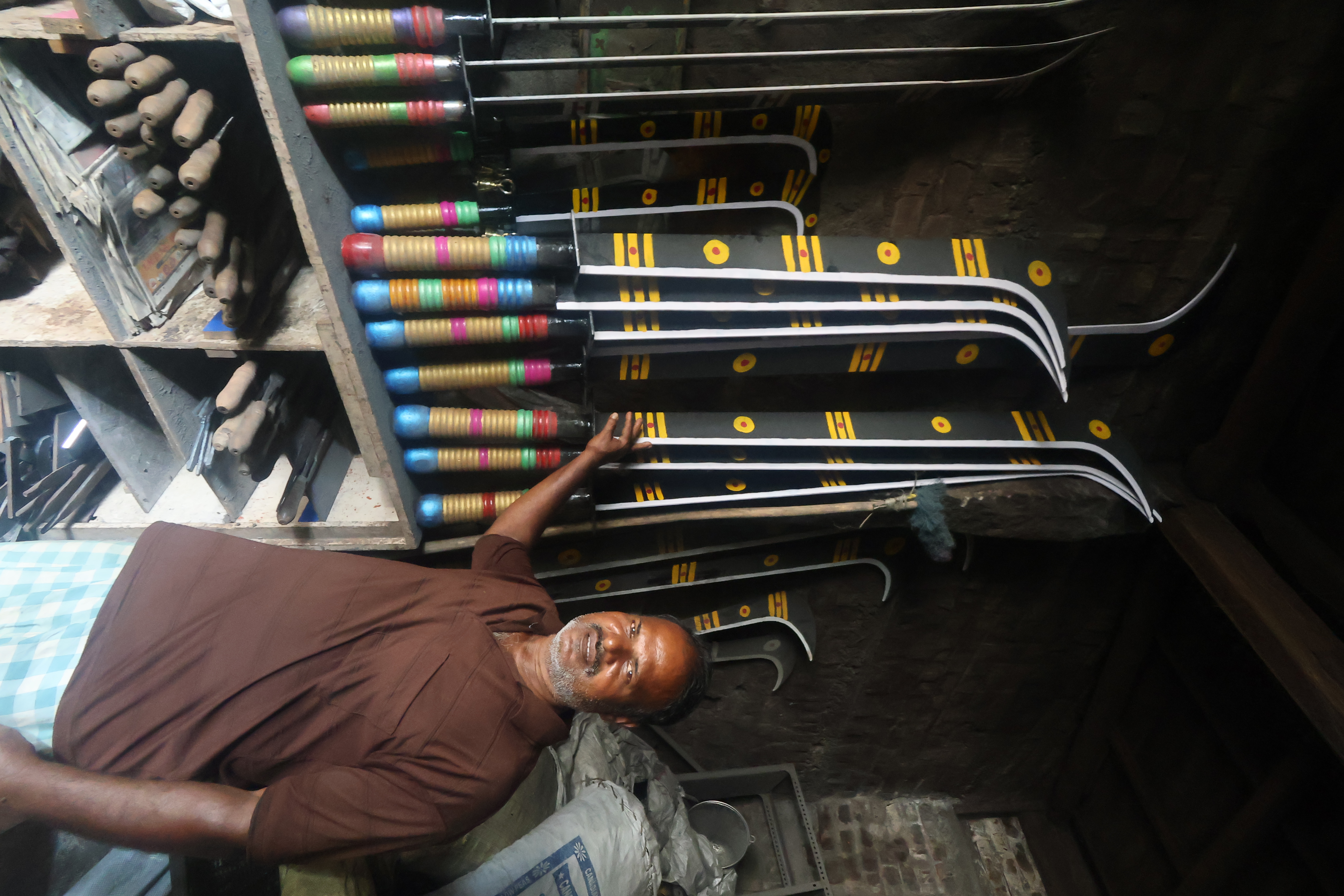
4. Tools produced: During the reign of the kings, it is said that they used to make agricultural tools and weapons and also make swords for the soldiers. Now, customers come to buy firewood cutting arivāl; different types of arivāl for cutting coconuts, spathes (called 'pālai' in Tamil), sugarcane, paddy, bunch of bananas and banana leaves; curved sickle (vāngarivāl), axes, shovels, hoe, digging bars (kadappārai) and other agricultural tools.
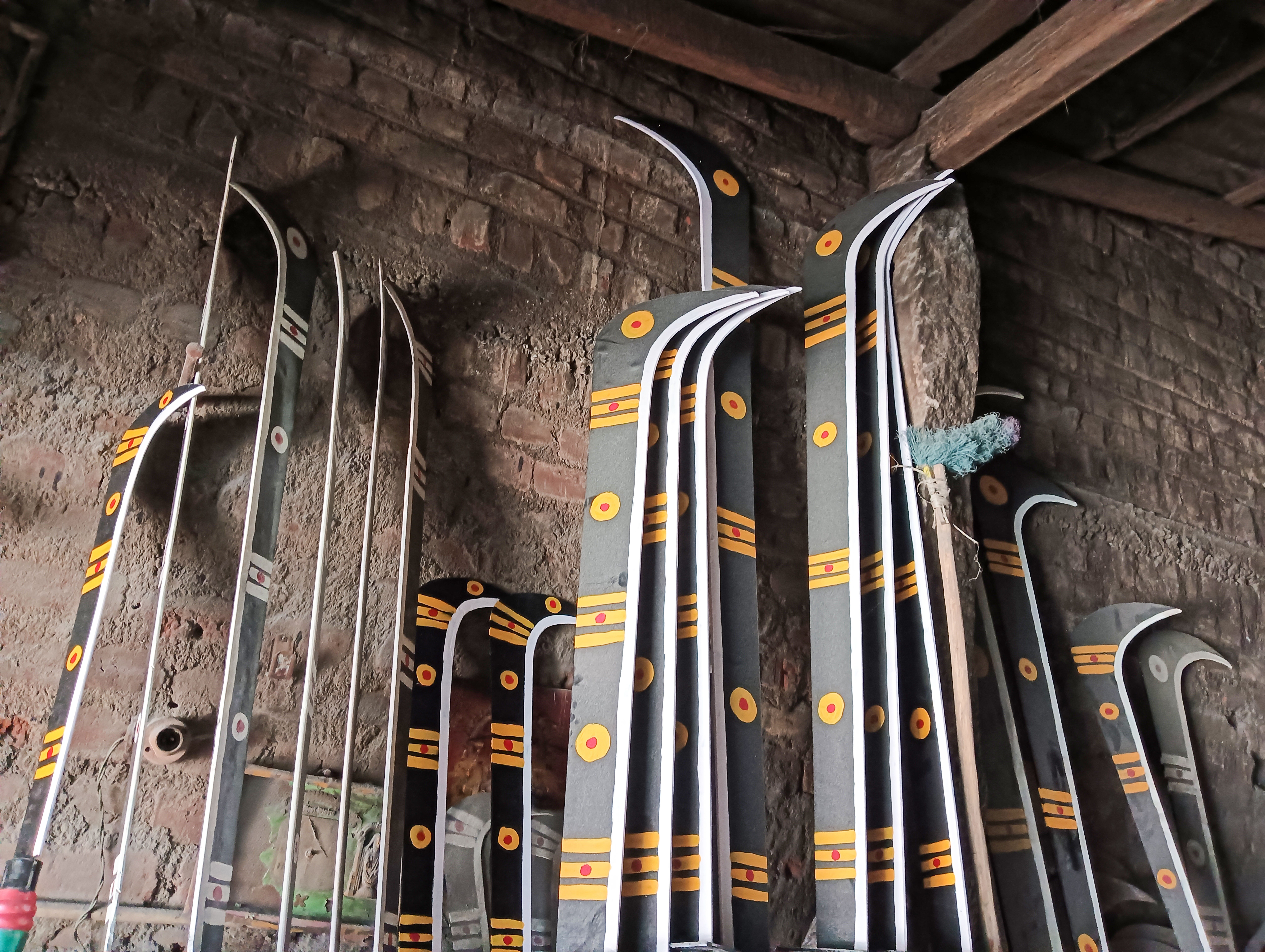
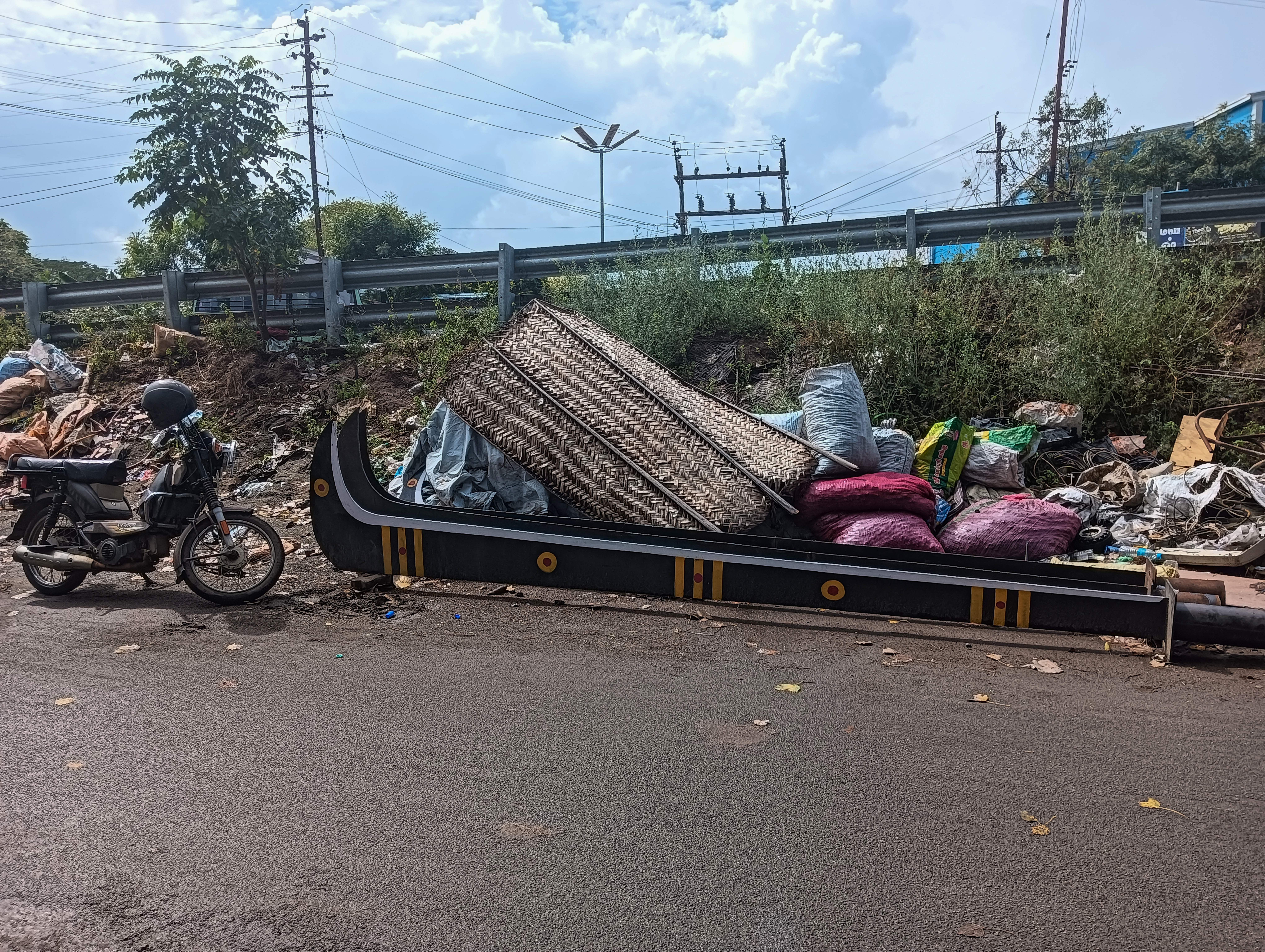
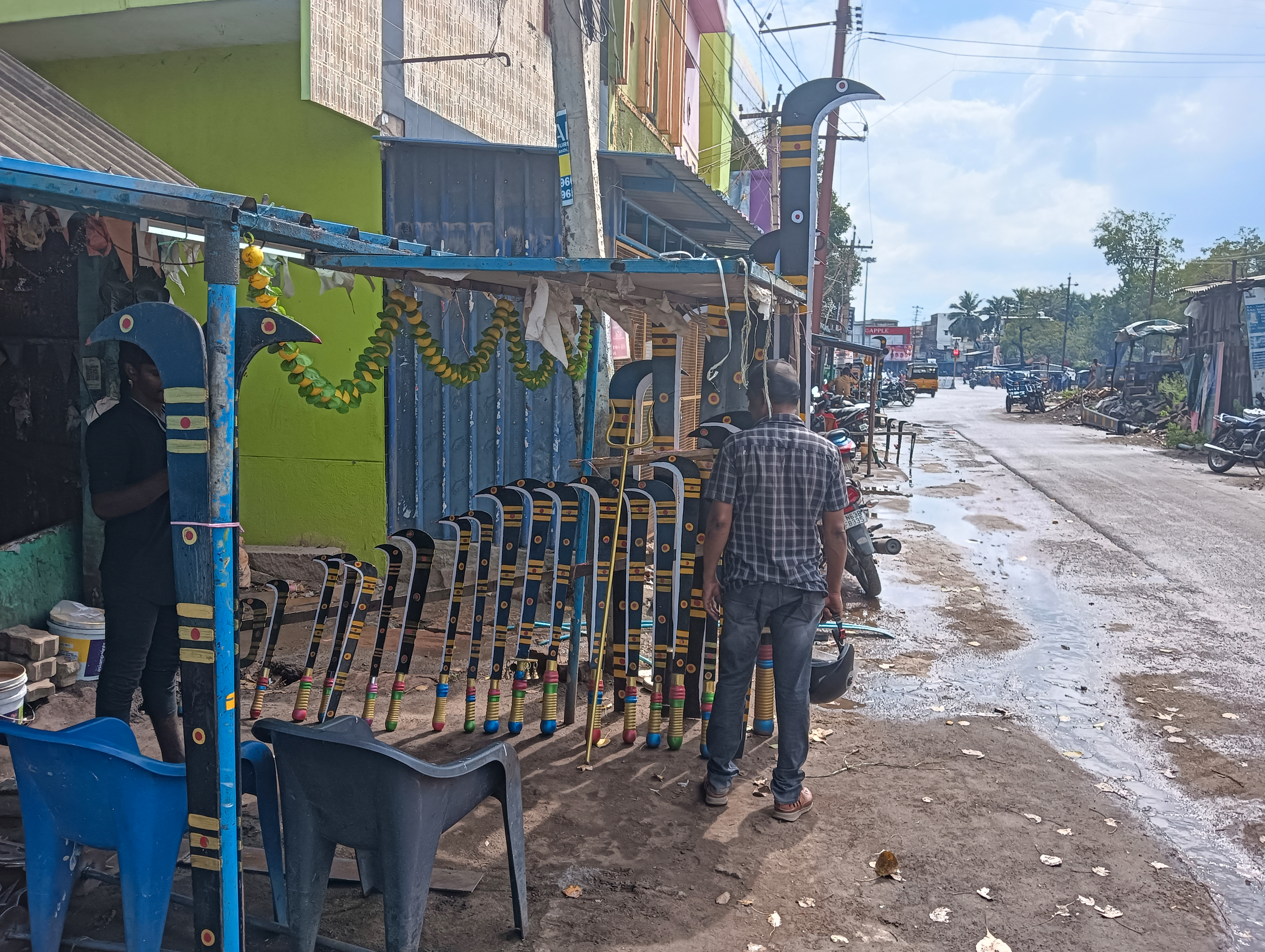
5. Production of weapons for votive offerings: Devotees who want to make votive offerings of arivāls to temples; especially those whose ancestral deities are Karuppu Sāmi, Sōnai Sāmi, Munisāmi etc. come to the iron smiths in this Thiruppuvanam and buy arivāl. Devotees write/draw the width, height and shape of the sickle they need on paper. Devotees specify the width, height, and shape of the arivāl they need by writing or sketching it on paper. The blacksmiths of this village, who have inherited and practiced this craft for generations, instinctively know which metal rod to use, what shape to forge, and how to bring it to life. The Sāmi arivāls (votive offerings) crafted here are bought by devotees to be placed at temples such as the Ettām Padi Karuppasāmi in the Madurai Alagarkoil and the Maranadu Karupavamy Temple near Tiruppachethi. The votive arivāls produced here are between 2 and 20 feet long. The arivāls crafted here are taken to towns ranging from Tirunelveli district all the way to the Tamil Nadu–Andhra Pradesh border. Each town uses a uniquely shaped deity sickles (Sāmi Arivāl). Because the artisans here are able to accurately craft the specific designs customers request, this village has earned a reputation as a renowned center for making Sāmi arivāl.
6. Conclusion: Here, they make arivāl of about 2 feet to 20 feet long for temple votive offerings. Customers come here not only from the local areas but also from other districts to buy these. However, in recent times, the demand for the iron products they manufacture has been declining. The reason is that the use of firewood has decreased. Moreover, mechanical tools are used for cutting firewood and agriculture instead of sickles.






 பதிவிறக்கவும்

 க.த.காந்திராஜன்